
Lake County Marriage and Divorce Offices
Lake County uses a split records structure. The Lake County Clerk and Recorder is the county elected office for marriage and civil union licenses, recording, elections, motor vehicle services, and related county clerk functions. The Lake County Combined Court clerk works under the Colorado Judicial Branch and handles District Court and County Court case files, including divorce, domestic relations, probate, criminal, civil, and traffic court files.
This office split is the main fact for Lake County marriage and divorce records. A certified copy of a recorded marriage or civil union license belongs with the Clerk and Recorder. A divorce decree, parenting plan, contempt filing, financial order, or dissolution case file belongs with District Court and the Combined Court clerk. Calling the wrong office can slow the request even when both offices are in Leadville.
The Lake County Marriage and Civil Union Licenses page is the local source for Lake County marriage record access and license steps.
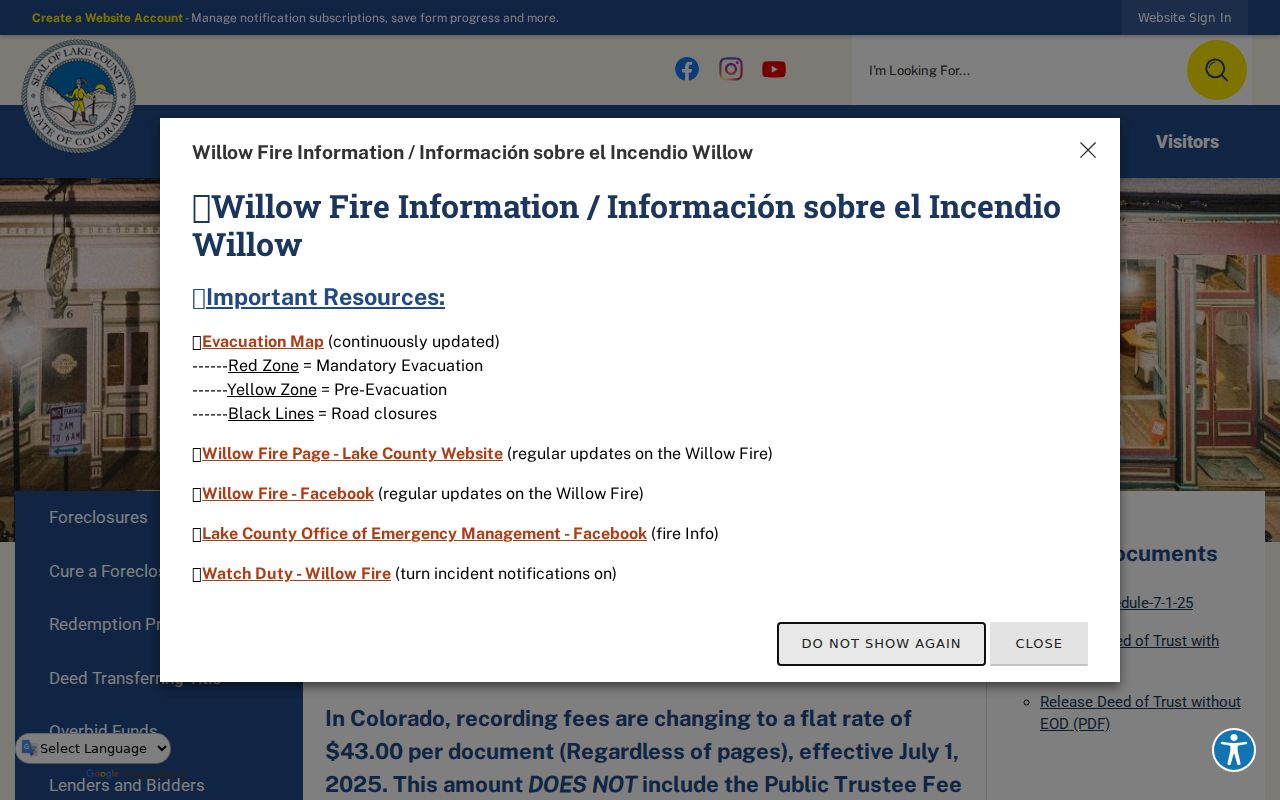
Use that county page for application, appointment, identification, fee, and certified-copy instructions before visiting the Clerk and Recorder.
Lake County Marriage Licenses
Marriage and civil union licenses in Lake County are handled by the Lake County Clerk and Recorder, not by the court clerk. The official county directory identifies Tracey Lauritzen as County Clerk and Recorder. The directory lists the office at 505 Harrison Avenue, Leadville, CO 80461, with mailing address PO Box 917, Leadville, CO 80461, general phone (719) 486-1410, election information (719) 486-7480, driver license information (719) 486-0888, and fax (719) 486-8061.
Colorado marriage process starts with the license application. Applicants present required identification, pay the current fee, receive the license if eligible, have the marriage solemnized by an authorized officiant or by self-solemnization if allowed under Colorado law, and return the completed certificate for recording. Colorado recognizes same-sex marriage. Colorado does not require a blood test. Common-law marriage is a different legal issue from obtaining a ceremonial license.
Lake County Clerk and Recorder
505 Harrison Avenue
Leadville, CO 80461
Mailing: PO Box 917, Leadville, CO 80461
(719) 486-1410
Apply for Lake County Marriage License
The county marriage page controls current appointment status, accepted identification, fee, and application details. Both applicants should use the names that match government identification. If either applicant was previously married, the application may require prior marital status and divorce or death information.
- Open the Lake County marriage and civil union license page.
- Review appointment, identification, age, license type, and payment instructions.
- Gather government-issued identification and any prior-marriage information requested by the county.
- Apply through the Clerk and Recorder process and pay the current Lake County fee.
- Complete solemnization and return the certificate for recording as instructed.
- Request certified copies from the Clerk and Recorder after the record is filed.
Lake County Marriage Application Fields
The official research captured a form-field inventory for the Lake County marriage and civil union process. Fields may be completed online, in person, or through another county process depending on current instructions, but the same core facts identify the applicants and license type.
| Field Label | Type | Required | Options / Format Notes |
|---|---|---|---|
| Applicant 1 legal name | text | yes | Use government-ID name. |
| Applicant 2 legal name | text | yes | Use government-ID name. |
| Identification | document | yes | Government-issued ID normally required. Confirm accepted IDs. |
| Date of birth / age | date/number | yes | Age restrictions apply under Colorado law. |
| Contact information | text/email/phone | yes | Needed for scheduling and follow-up. |
| Marriage or civil union selection | checkbox/radio | yes | Choose license type. |
| Prior marital status | text/checkbox | likely | Divorce or death date may be required if previously married. |
| Ceremony/officiant information | text | after license | License must be completed and returned after ceremony. |
| Fee payment | payment | yes | Use the current Lake County page for fee and accepted methods. |
Lake County Marriage Fees
The research did not capture current Lake County marriage license fees, certified marriage copy fees, divorce filing fees, or certified divorce decree copy fees from Lake County-specific official text. Exact dollar amounts should be checked on the county marriage page, with the Clerk and Recorder, or with the Colorado Judicial Branch fee schedule before filing or ordering.
| Item | Amount / Source |
|---|---|
| Marriage or civil union license | Current Lake County amount not captured. Check the county marriage page. |
| Certified marriage or civil union copy | Current amount not captured. Ask the Clerk and Recorder. |
| Divorce filing | Lake County-specific amount not captured. Check Colorado Judicial Branch fee schedule. |
| Certified divorce decree copy | Current amount not captured. Ask the Lake County Combined Court clerk. |
Note: Marriage license fees and divorce court filing fees are paid to different offices, so verify the custodian before sending payment.
Search Lake County Marriage Records
Certified copies of recorded Lake County marriage and civil union licenses come from the Clerk and Recorder. Historical marriage records may be in county recording archives, so genealogy requests should ask the Clerk and Recorder about older index coverage and copy options. State vital records may provide certain verification or certified-record services, but the county license record remains local.
The Colorado Department of Public Health and Environment is the state-level vital records office referenced by the Lake County research.
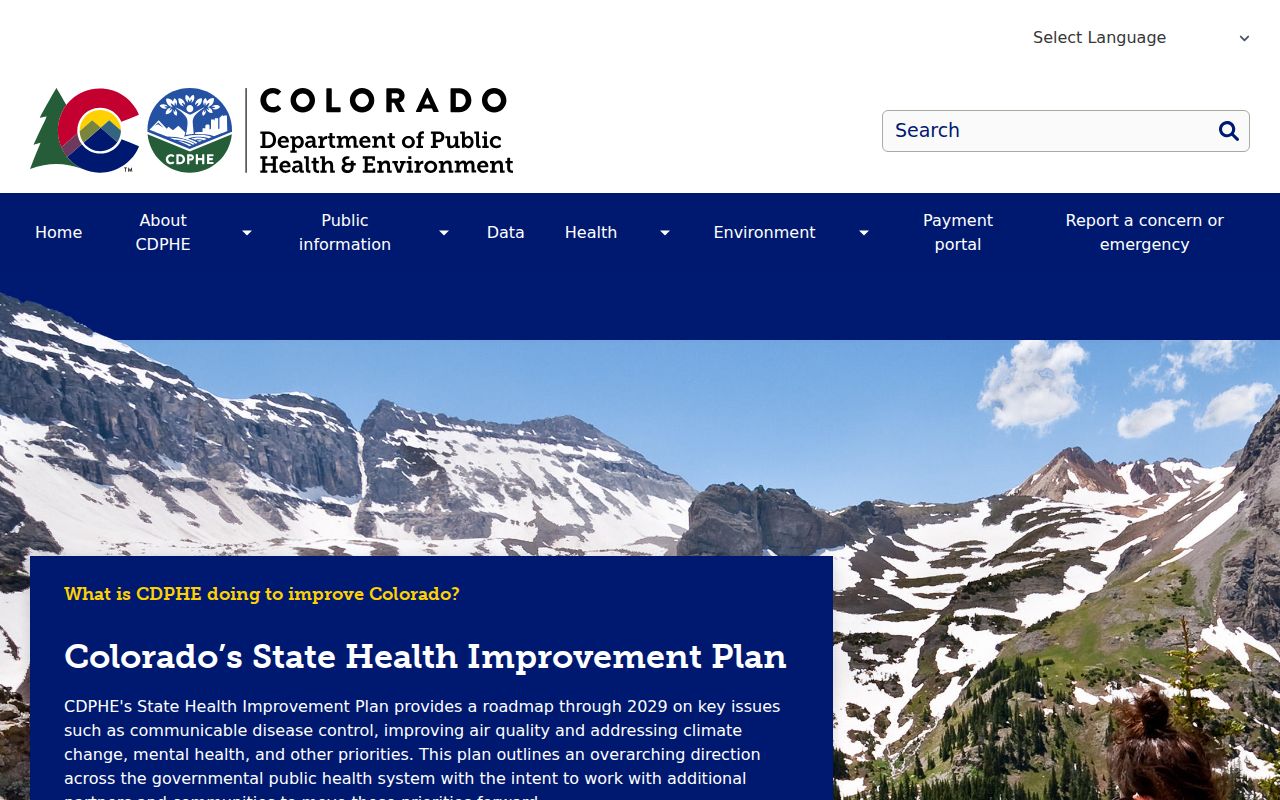
Use CDPHE for state vital-record services, but route Lake County license copies to the Clerk and Recorder when the local record is needed.
Find Lake County Divorce Records
Divorce and dissolution of marriage cases are District Court matters in Lake County. The case begins with a petition, summons if needed, case information sheet, financial disclosures, and service or co-petition filing. Cases involving children require parenting, child support, and decision-making issues. The final decree ends the marriage. Parenting plans, support orders, property division, and maintenance orders may be separate documents or incorporated into final orders.
Public hearing and docket information can be searched through the Colorado Judicial dockets page. Copies of decrees, orders, parenting plans, and case documents come from the Lake County Combined Court clerk. The Clerk and Recorder does not issue divorce decrees. Use the Combined Court clerk for court case records when a certified divorce document is required.
| Field Label | Type | Required | Options / Format Notes |
|---|---|---|---|
| County | dropdown | yes | Lake County. |
| Case number | text | optional | Best field if known. |
| Party last name | text | optional | Search both current and former names. |
| Party first name | text | optional | Use spelling on court documents. |
| Date / hearing date | date | optional | Docket search is date-driven for hearings. |
| Court | dropdown | optional | District Court for divorce. |
Lake County Divorce Filing
Colorado is a no-fault dissolution state. Parties do not need to prove misconduct to end the marriage. Use Colorado Judicial Branch divorce self-help forms and instructions for statewide procedure, then file in Lake County District Court when venue and residency requirements are met. Fee-waiver forms may be available when a person cannot pay the filing fee.
The Colorado Judicial Branch divorce self-help page is the statewide forms and instructions source for Lake County divorce record and filing work.
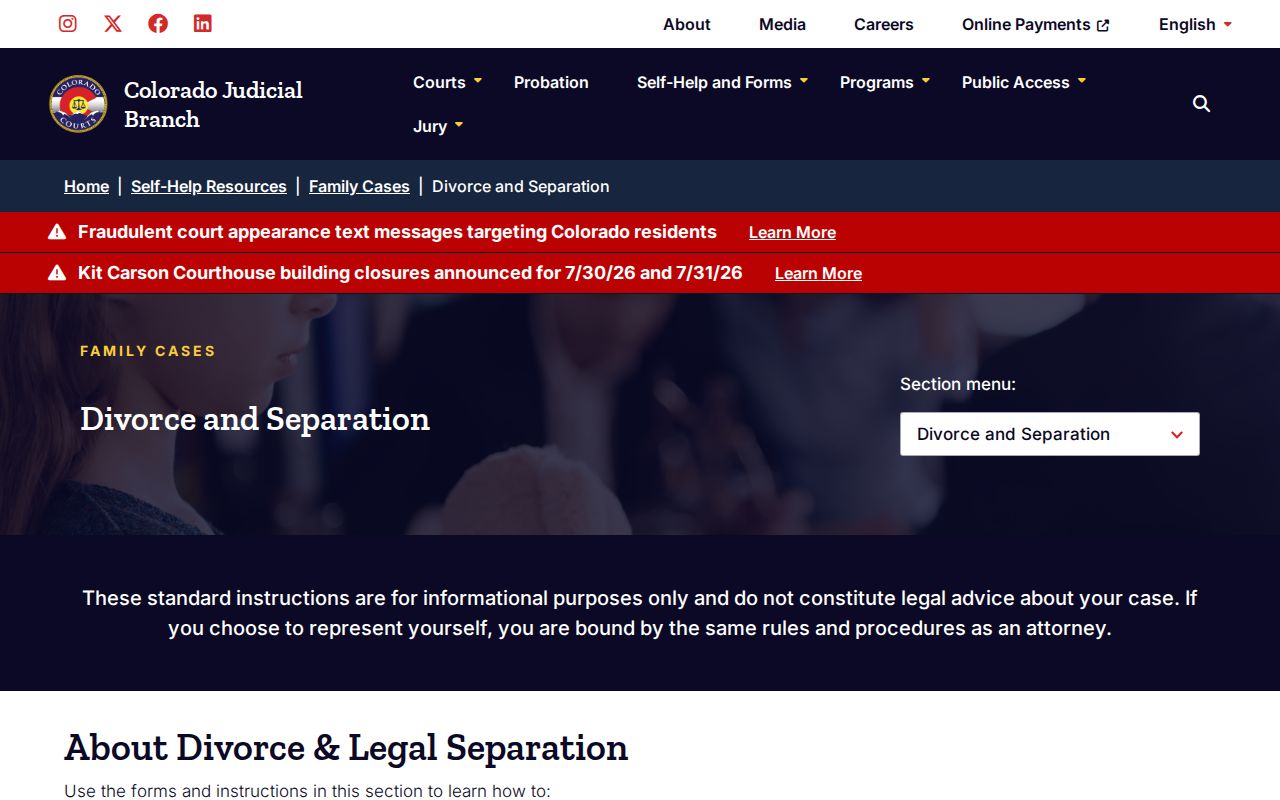
Those statewide forms support filing, while Lake County Combined Court remains the local court record and certified-copy office.
Restricted Lake County Divorce Records
The existence of a divorce case and final decree may be public, but not every document is open. Financial affidavits, child-related details, evaluations, protected addresses, medical material, and sealed filings can be restricted or redacted. Certified divorce decrees must come from the court clerk, not the Clerk and Recorder. Marriage license certified copies come from the Clerk and Recorder, not the court clerk.
Vital records statutes and CDPHE rules can require eligibility and identity proof for some certified vital-record services. Court records are governed by judicial-branch access rules and case-specific orders. A request should name the record, case number or license date if known, parties, preferred copy type, and whether certification is needed.